Heraklion is located in the eastern part of the island of Crete and is its capital. The city features a medieval old town that reflects its rich history and its position as a crossroads between three continents. It offers a wide range of museums, historical attractions, culinary experiences, shopping opportunities, and swimming destinations.
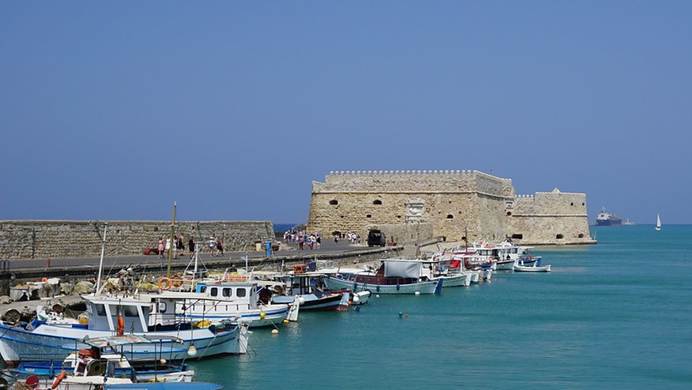
Visitors can explore the city’s historic streets, many of which offer pleasant walking experiences away from traffic noise. A walk can begin at the Venetian fortress, which has a complex history reflected in its various names and uses. The Venetians called it “Rocca al Mare”, while the name “Koules” dates back to the Ottoman period. From the fortress, visitors can look north across the sea towards the uninhabited island of Dia, where evidence of ancient Minoan settlement has been found, dating from approximately 2700 to 1450 BC.
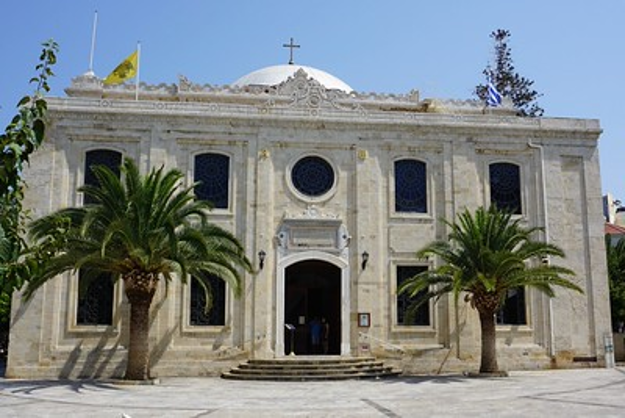
Around 5 km south of the city centre lies Knossos, one of the most important centres of Minoan civilisation. Knossos was a major centre of trade and economic activity, featuring monumental palace buildings and extensive workshop facilities. Back in the city centre, visitors can admire the Morosini Fountain, also known as “Liontaria”, which is decorated with lion sculptures and associated with Greek mythology. Nearby, Agios Minas Cathedral features religious iconography within its imposing walls, while the Basilica of Saint Catherine of Sinai, built in 1555, houses an important collection of religious icons. The Heraklion Archaeological Museum exhibits artefacts from archaeological sites across Crete. The Natural History Museum of Crete features extensive collections covering geodiversity, palaeontology, botany, and other fields, as well as educational and ecological activities. CRETAquarium showcases approximately 1,500 marine animals representing 130 different species found in the Mediterranean basin.
Cretan cuisine, one of the most distinctive expressions of the Mediterranean diet, brings together local aromas, flavours, culinary skills, and fresh ingredients. Heraklion offers a variety of modern restaurants and traditional tavernas. The city centre also features numerous bars, nightclubs, and both modern and traditional cafés. Shopping opportunities include the Talos Plaza shopping centre, as well as the main shopping streets of Kalokairinou, Dikaiosinis, and Daidalou, along with the surrounding areas, where visitors can find major retail chains and exclusive fashion stores. Fresh fruit and vegetables are available at open-air markets throughout the week. Visitors can also enjoy swimming at water parks and organised beaches near the city, many of which are accessible by local bus and offer facilities for bathing and water sports, as well as lifeguard services.
In June, the average daily temperature in Heraklion is approximately 24°C, while the average sea temperature is around 23°C.More info at: